
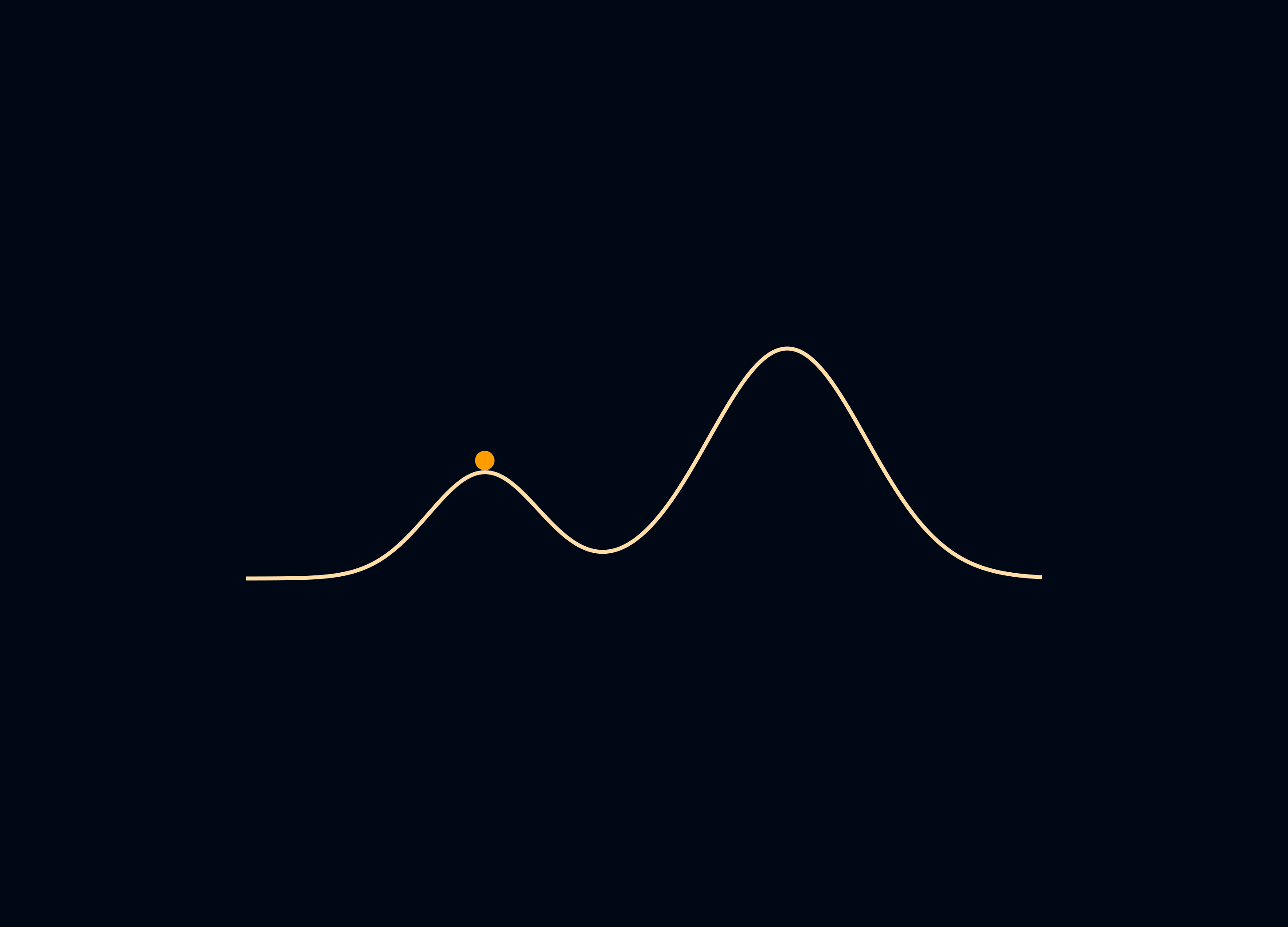
Optimizing feels like moving forward. Each new version is a little better than the one before: fewer wasted minutes, a more orderly morning, a number that keeps going up.
But optimizing needs something to work on. It needs a starting point, last month's figures, the way the thing was done before. Only with those in hand can it do the thing a little better. So the material of optimizing is always something that has already happened.
That is why the better optimization works, the more tightly it stays tied to the shape it started with. An optimized morning is yesterday's morning with the rough edges taken off. An optimized career is the same ladder, climbed with less effort. There is nothing wrong with either. It is just that neither goes anywhere other than where the past was already pointing.
Optimizing is very good at one question: how could this be better? But it almost never asks, “Why this?” It can’t, really, because what it would have to question is the very thing it is standing on. The existing pattern is its input. Take the pattern away and there is nothing left to improve.
This is also why something new so rarely wins against something familiar. The new thing has no history. Its first attempt is compared with the old thing’s hundredth, and it loses every time by a measurable margin. An optimizing mind reads that margin as evidence. But the margin says nothing about the new thing. It only shows how long the old one has been tuned.
From the inside, none of this feels like living in the past. It feels like discipline, like progress. The numbers really are going up. And still a feeling of being stuck can remain that no improvement reaches, because every improvement is made of the same material as the thing that feels stuck.
That feeling is not the result of failing to optimize well enough. It is exactly what good optimization produces when nothing new goes into it.
None of this makes optimization the problem. Inside a frame worth keeping, it is exactly the right tool. Bridges should be optimized, and so should most of what keeps a day running. The trouble starts only when the thing that needs questioning is the frame itself, and the only tool in hand is one that accepts the frame as it is.
The unknown has no data. That is usually read as a reason to stay away from it. But every pattern we now think is worth optimizing started there. The morning routine we keep adjusting was once a strange new habit that felt like a wasted morning. The skill we are proud of was once a first attempt that lost badly to whatever we did before it. The data came later, and it came because someone went there.
So stepping outside the pattern rarely looks like courage from the inside. It looks like a worse number. Like a slower month. Like being a beginner again while the thing we are good at is still within reach. An optimizing mind calls that a mistake, and by its own measure, it is right.
What keeps a frame in place is usually not the things we are bad at. Usually it is the things we are good at.
— P1st