
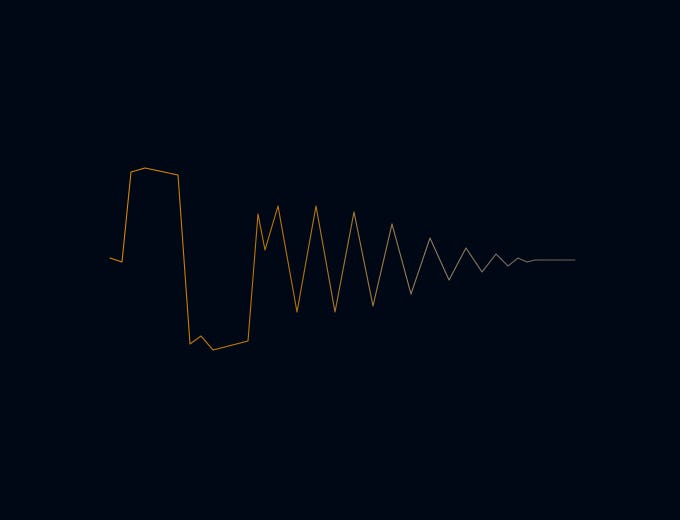
"Joy, anger, grief, delight... and no one knows where they sprout from."
— Zhuangzi, Inner Chapters II (trans. Burton Watson)
The commitment was made in March. A date, a room, a set of people expecting the version of you that existed on the day you said yes.
March had a mood. This morning has a different one.
Nothing has gone wrong. No one died, the work is fine, the money came in. But you woke up as someone who would not have agreed to any of it, and the calendar does not ask which version showed up.
So you go anyway. You do a passable impression of the March person. And halfway through, underneath everything, one sentence keeps running: what is wrong with me today.
Nothing is wrong. That is the harder answer, and it is the one nobody wants.
The complaint sounds like it is about the bad mood. It isn’t.
A bad mood with a date on it is survivable. Grief has an anniversary and you make room for it. The dread before a hard conversation is awful and completely bearable, because it has a cause and a finish line. We tolerate enormous amounts of feeling bad when we know when it starts and when it stops.
What actually breaks us is the ordinary Tuesday. Nothing attached to it. No event, no loss, no explanation that would hold up if someone asked. Just a different person wearing your clothes and answering to your name.
We say we want to feel good. That is not it. We want to know in advance.
Feeling bad on schedule is fine. We book it ourselves all the time: the dentist, the flight, the funeral, the conversation we have been putting off for a month. The suffering was never the problem. The ambush is.
The demand is not only yours. Consistency stopped describing the work and started describing the person.
Reliable used to mean the thing gets done by Friday. Now it means the same energy in every meeting, the same tone in every message, the same face this morning as the one from last Thursday. Variance itself reads as a defect. There is an entire industry selling the repair.
Coffee at the same hour. The morning routine. The protocol, the stack, the cold water, the tracked sleep. All of it is sold as a performance tool. All of it is a range-narrowing device.
And it works. That is the part nobody argues with. Narrow the range and the days become predictable, the output goes steady, the people around you relax. You become someone who can be scheduled.
The bill arrives quietly. The Tuesday that flattened you is gone, and so is the Thursday nobody planned, the one where something came loose and the work went somewhere it had not been going. Those were never two separate systems. Same door.
The range was never noise around a signal.
The high days and the low days are not deviations from some true baseline underneath. There is no baseline. There is a range, and the range is the whole instrument. Cut the bottom and the top goes with it. They are made of the same material.
The person who has fully succeeded at this is not calm. They are flat. And flat is very easy to mistake for steady, especially from the outside, especially by the one doing it.
I have built entire weeks so I would not find out what Thursday would feel like. I called it discipline.
There is no version of this where the mood starts booking appointments.
It never did. It does not answer to the calendar, does not check the commitments, does not know what you promised in March or who is expecting you at two. It arrives with no notice, no explanation, and no interest in whether this is a good week.
That unreliability is not the malfunction in an otherwise working system.
It is the last part of you that is not performing.
— Perspective First
There is a second publication. Borrowed Eyes takes one person at a time. Not what they made, but how they saw, and how the seeing became a life.