
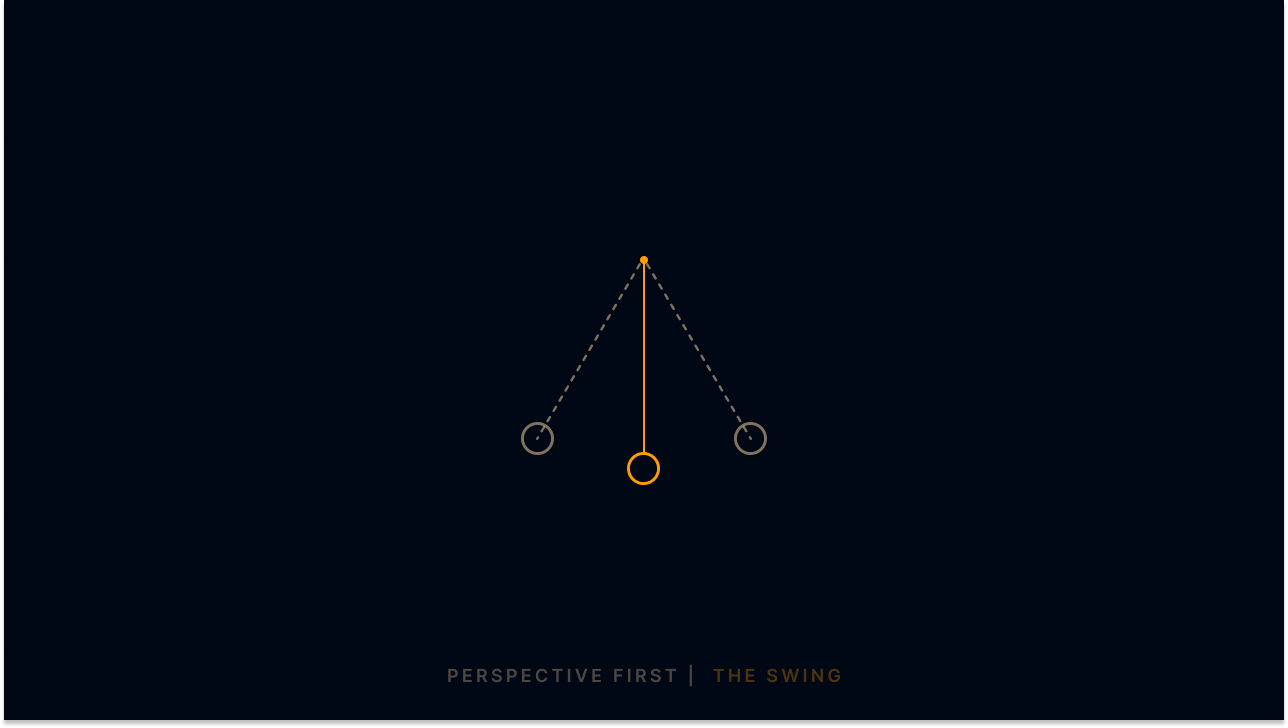
One year you say yes to everyone. The next year you build a wall.
In the yes‑self, the late call gets answered. The colleague’s request gets a reply at six in the evening. The relative who only calls when something is wrong gets half an hour. You finish the year tired in a way sleep does not fix.
In the no‑self, the phone goes silent. The late caller is not called back. The request is read and ignored. You finish less tired but emptier, an emptiness the tiredness never warned you about.
These feel like opposites. They are the same pattern in two costumes. Both end in the same room: no one is there.
That room is the exhaustion of the yes‑self and the emptiness of the no‑self. Same thing, two names.
What was being refused was never the friend, the colleague, or the relative. It was the small interval between the request and your response. One second, maybe two. The space where you would have had to know what you actually want.
Saying yes too fast skips that interval. Saying no too fast also skips it. The fastness is the move. The direction is only the costume.
That interval is small. It does not feel like a place where a self lives. It feels like an awkward hesitation, a delay you are supposed to clean up by deciding faster. But deciding faster is what burns the self off. The interval was where the self would have been.
Here is the door: you are not being asked to stop swinging. You are being asked to notice the gap between the swings. Just notice it. Not for a long time. For two seconds before you answer the next request.
The swing will always offer its next costume. But after you have seen the gap, you do not need to refuse the swing. You only need to remember that the costume is not who you are.
And that is not a beautiful lesson. It is a small, boring, unglamorous thing: a pause. Which is exactly why it is the only thing that has ever worked.
— Perspective First